





Maintaining your GDPR Record of Processing Activities (RoPA)
Maintaining your GDPR Record of Processing Activities (RoPA) is more than a legal obligation, it’s a strategic tool. Discover how to keep your record accurate, up-to-date, and fully aligned with compliance requirements.
Maintaining your GDPR Record of Processing Activities (RoPA)
With the advent of the General Data Protection Regulation, the protection of personal data has become an essential priority for organizations processing personal data. At the heart of this effort lies the record of processing activities (RoPA), an indispensable tool for efficiently cataloging all personal data processing carried out by an organization. Far more than a simple administrative formality, this record represents the cornerstone of GDPR compliance and must be maintained over time.
Record of Processing: the basics
The record of processing activities, whose design and maintenance by the data controller are required by Article 30 of the GDPR, goes beyond a mere legal obligation. It forms the foundation of your organization’s GDPR compliance and may be audited by the supervisory authority. It provides several practical benefits:
-
Risk management and governance: The record helps identify areas most exposed to personal data protection risks, thus facilitating the definition of appropriate action plans (volume of processing, types and categories of personal data collected & processed, type of data subject, etc.).
-
Understanding and control of data: The record provides a comprehensive view of the personal data processed and the associated processes (retention period, processing purposes, data controllers, etc.), ensuring a detailed understanding of how data is used within the organization. This accelerates, for example, the management of personal data breaches or the handling of data subject rights requests.
-
Transparency and accountability: The record reinforces the organization’s transparency and accountability toward the rights and freedoms of data subjects, especially when sensitive data is involved (employees, clients, prospects, etc.).
Record of Processing: a tool to maintain over time
Although the first step of a GDPR compliance program involves creating the record of processing activities, this exercise should not be considered an end in itself. Continuous maintenance of the record is imperative, requiring regular updates based on changes to processing operations.
Several factors should prompt updates to the record:
-
Emergence of new processing operations
-
Significant changes to existing processing operations, such as changes in subcontractors, software, scope, etc.
-
Removal of existing processing operations
How to maintain your record of processing over time
The sustainability of the record relies on an effective combination of governance, well-defined procedures, and ongoing awareness at all levels of the organization:
-
Identifying the actors responsible for the record: An effective approach is to rely on a network of data protection officers across different departments tasked with updating the record as changes occur. This highlights the importance for the DPO to build a community of data protection officers, assign them clear responsibilities, and dedicate time to their development to strengthen their skills.
-
Implementing a Privacy by Design procedure: Defining and deploying a Privacy by Design approach, built in collaboration with business units, particularly project managers involved in data processing, is fundamental. It is the pivot for maintaining the record, ensuring analysis of any new processing or significant changes to an existing processing operation.
-
Integrating record review into the internal control plan: This can be done by launching an annual record review campaign led by the Data Protection Officer, conducted by the designated data protection officers.
-
Raising awareness among all employees: Awareness is an important driver for best practices and GDPR compliance habits. It ensures dissemination of procedures and highlights the key actors in the compliance framework. The more employees are aware, the lower the risk that the DPO and their community of officers will miss important projects involving personal data.
-
Regular interaction between the Data Protection Officer and business units: Frequent exchanges between the DPO and business departments (IT, Marketing, HR, etc.) allow the DPO to stay informed of upcoming projects that may require record updates.
The record of processing is an essential tool for GDPR compliance. By maintaining and updating it over time, the organization ensures it has a reliable and up-to-date document to guide compliance actions and demonstrate adherence to regulatory requirements.
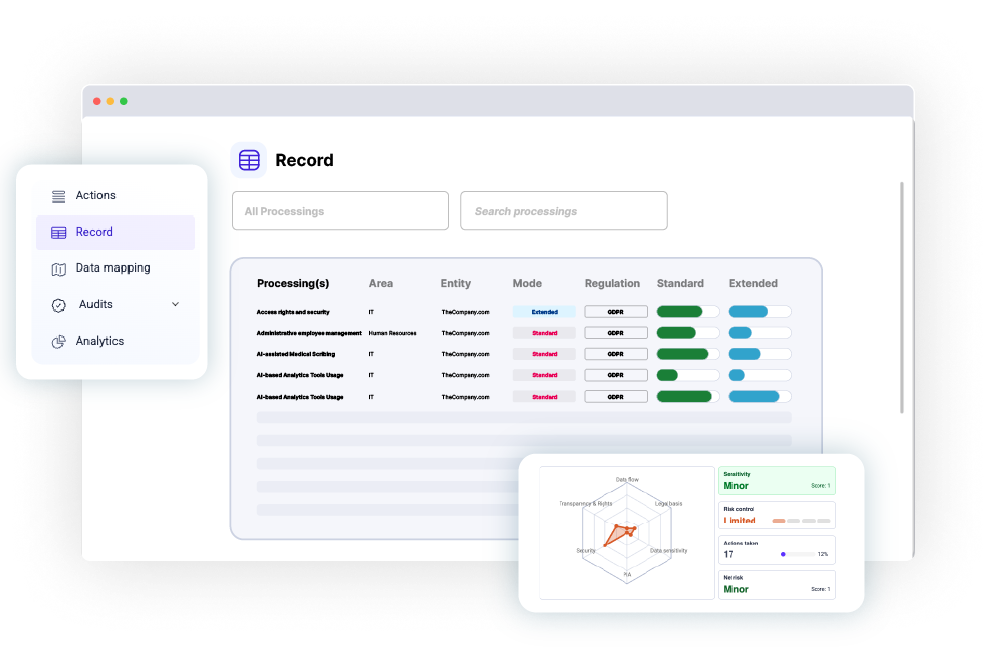
Discover how EQS Privacy Cockpit helps you sustain your record by digitalizing it and connecting it to the key elements of your compliance program.
Conclusion
Maintaining a record of processing activities is not a one-time exercise: it is an organizational discipline. When it is regularly updated, integrated into internal processes, and supported by a network of engaged actors, it becomes a true strategic tool for managing compliance. With solid governance, a Privacy by Design approach, and the right tools, your record becomes a major asset for sustainable and operational compliance.