





Free AI Governance Self-Check
From AI Deployment to Responsible AI Governance
Do you know which AI applications are in use, who makes decisions about them, and how assessments and evidence are documented? Check how your AI governance is organized in 11 questions – and where you can start next.

More than 14,000 organizations worldwide trust EQS





Close visibility gaps
in AI deployment
AI capabilities have long been embedded in both procured and internally developed tools. Without a shared inventory and clear responsibilities, it is difficult to track which applications have been assessed, who makes decisions, and where the associated documentation is stored.
Data privacy teams bring valuable experience with assessments, responsibilities, and documented decisions. These workflows provide a helpful foundation for collaborating with Legal, Compliance, IT, and Risk on AI governance.
The free self-check asks about key organizational fundamentals: from the AI inventory and classification of relevant obligations to approvals, monitoring, and documentation.
How the self-check works
Answer 11 short questions and see where your organization currently stands regarding AI governance.
-
Start the self-check
Answer 11 questions about the current state of AI governance in your organization. (Approx. 5 minutes)
-
Evaluation by email
Based on your answers, you will receive an initial assessment along with relevant resources on the EU AI Act and AI governance.
-
Choose your next step
Deepen your knowledge with one of the suggested resources or speak with an EQS expert.
*This self-check provides an initial orientation on your organization’s AI governance. It does not constitute legal advice and is not an assessment of Compliance with the EU AI Act. Which requirements apply depends on your role and the specific AI use cases.
EQS Resource Hub on the EU AI Act and AI Governance
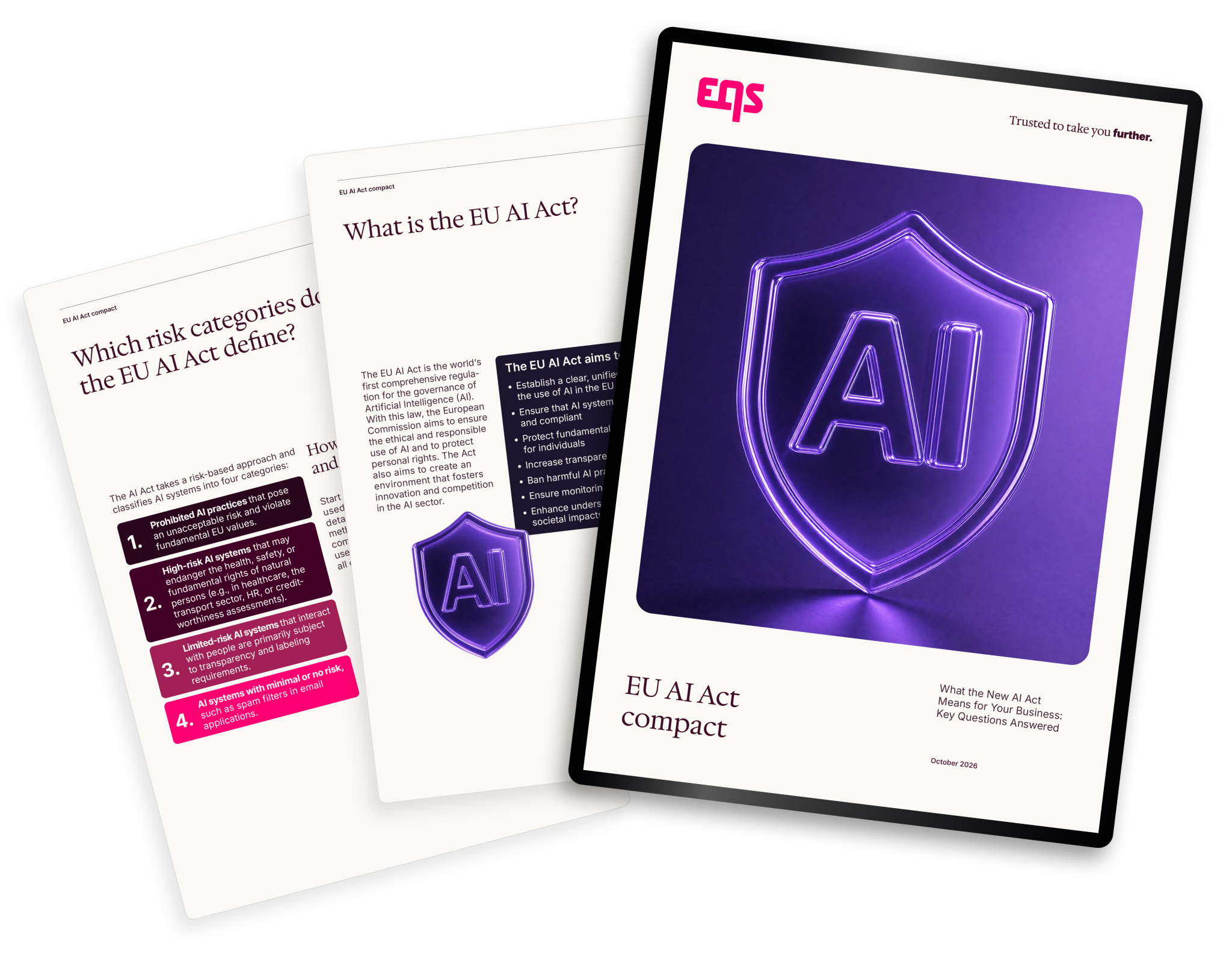
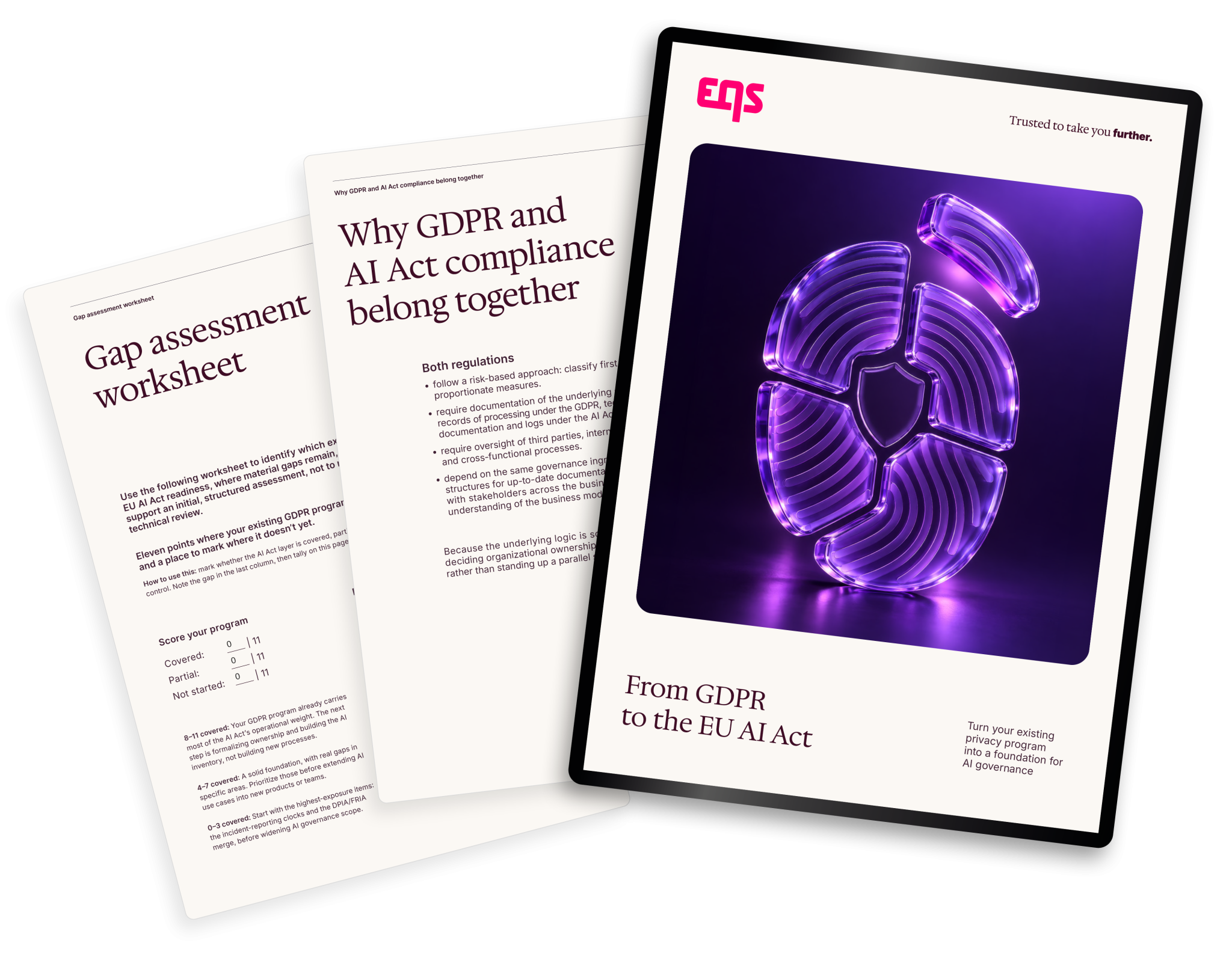

Understanding and Implementing the EU AI Act
- PART 1
- PART 2
Speak to our experts
Discuss your AI governance directly with our experts

Discuss with an EQS expert how to connect data protection and AI governance, structure responsibilities, and efficiently prioritize the next steps for your AI use cases.