01
Increase reporting volume with trusted anonymous reporting software
When employees don't trust anonymous reporting systems, they don't report — and small issues become major compliance failures. Our zero-tracking architecture eliminates retaliation fears because we built true anonymity from day one, not as an afterthought. The result? Higher reporting rates and earlier issue detection before they escalate into regulatory violations.
02
Accelerate case resolution with AI-assisted case management
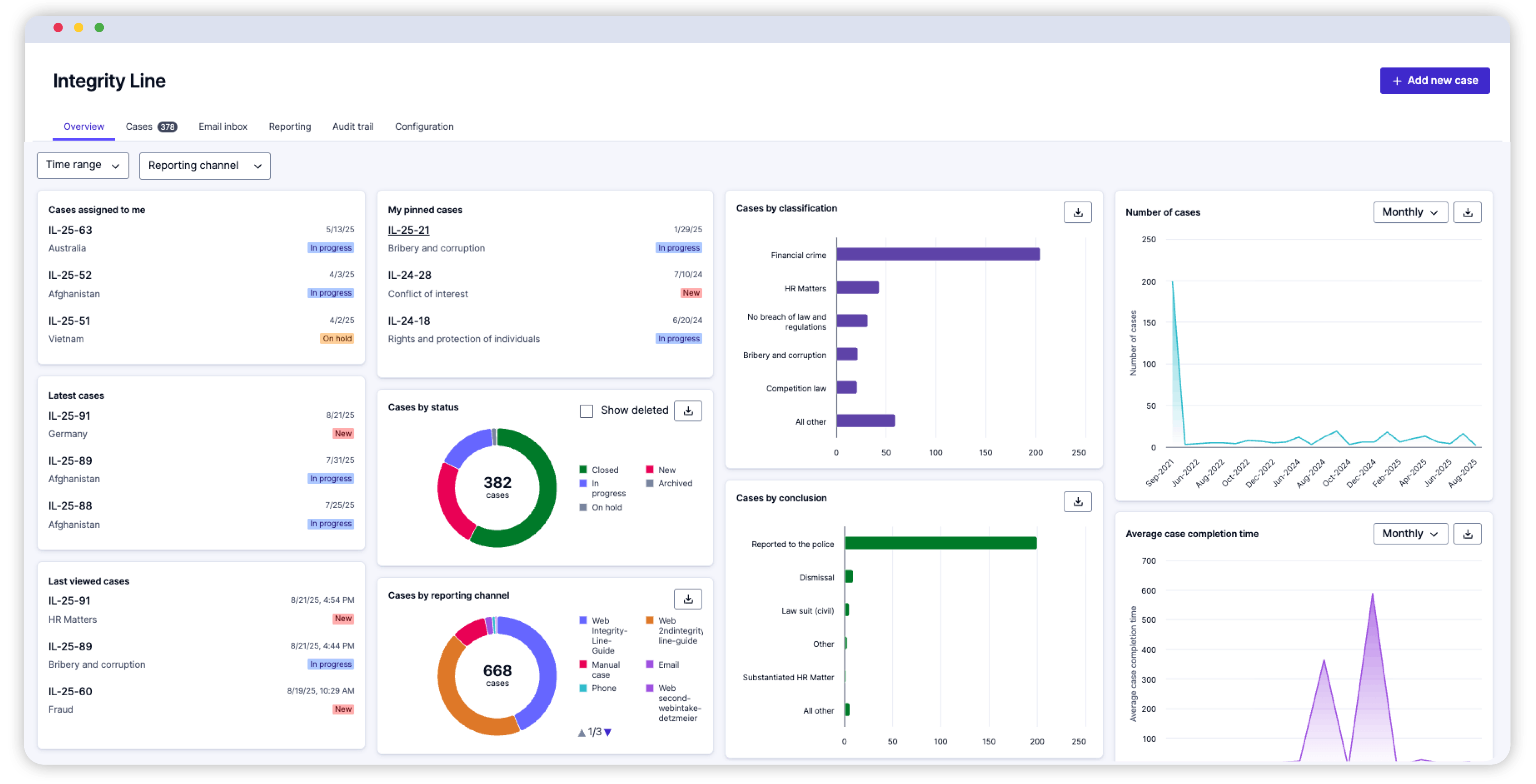
AI-assisted case management trained on compliance data can transcribe voice reports, anonymize personal data, and route cases based on configured risk levels, categories, and internal responsibilities. Urgent issues can escalate immediately while routine matters follow standard workflows. Your team spends more time investigating and less time on manual administration.
03
Meet EU Directive and internal investigation deadlines without spreadsheets
Missing deadlines is expensive and avoidable. Built-in deadline workflows support EU Whistleblower Directive acknowledgment and feedback timelines, plus configurable milestones for other regulatory programs. That reduces spreadsheet tracking and makes audit trails easier to review.
04
Run multilingual whistleblowing programs from one secure platform
Global compliance programs shouldn't require separate systems for each region. Handle reports in 80+ languages with AI translation that preserves compliance context — not just literal wording. Configure country-specific intake forms, disclosures, and workflows where needed, while maintaining centralized oversight and consistent governance standards.
05
Advanced case management for structured, defensible investigations
Most tools document case outcomes. Advanced case management helps you manage the investigation — guiding your team through planning, evidence gathering, interviews, and findings. Standardize procedures across teams while maintaining a complete audit trail that demonstrates a consistent, good-faith process.




 EQS INTEGRITY LINE