What is compliance management software?
Compliance management software is a platform that helps organizations manage the policies, processes, investigations, and documentation required to demonstrate adherence to laws and regulations.
For compliance and ethics teams, this typically covers whistleblowing channels, conflict of interest disclosures, third‑party due diligence, policy distribution, and audit reporting. When these functions run across separate tools, evidence gaps form, creating regulatory and reputational exposure that a single platform with a unified audit trail is designed to prevent.
What features should compliance management software include?
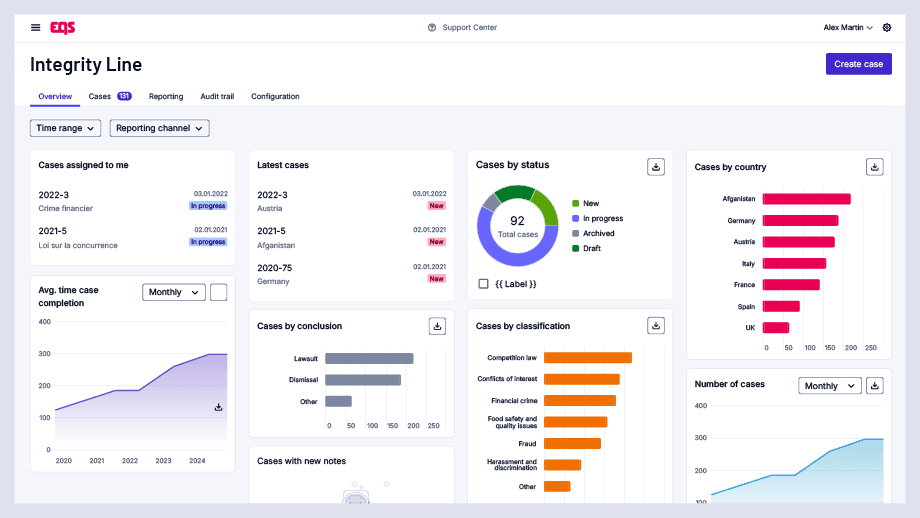
Compliance management software should include investigation management, whistleblowing channels, policy management, disclosure workflows, third‑party risk management, compliance reporting, audit trails, and workflow automation. Organizations should also evaluate integration capabilities, data security, and regulatory coverage.
How does EQS Compliance Cockpit differ from point solutions?
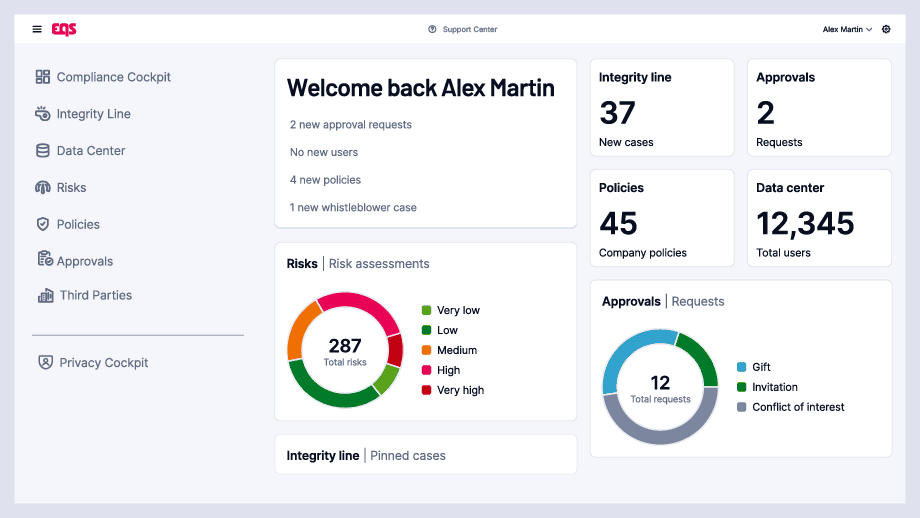
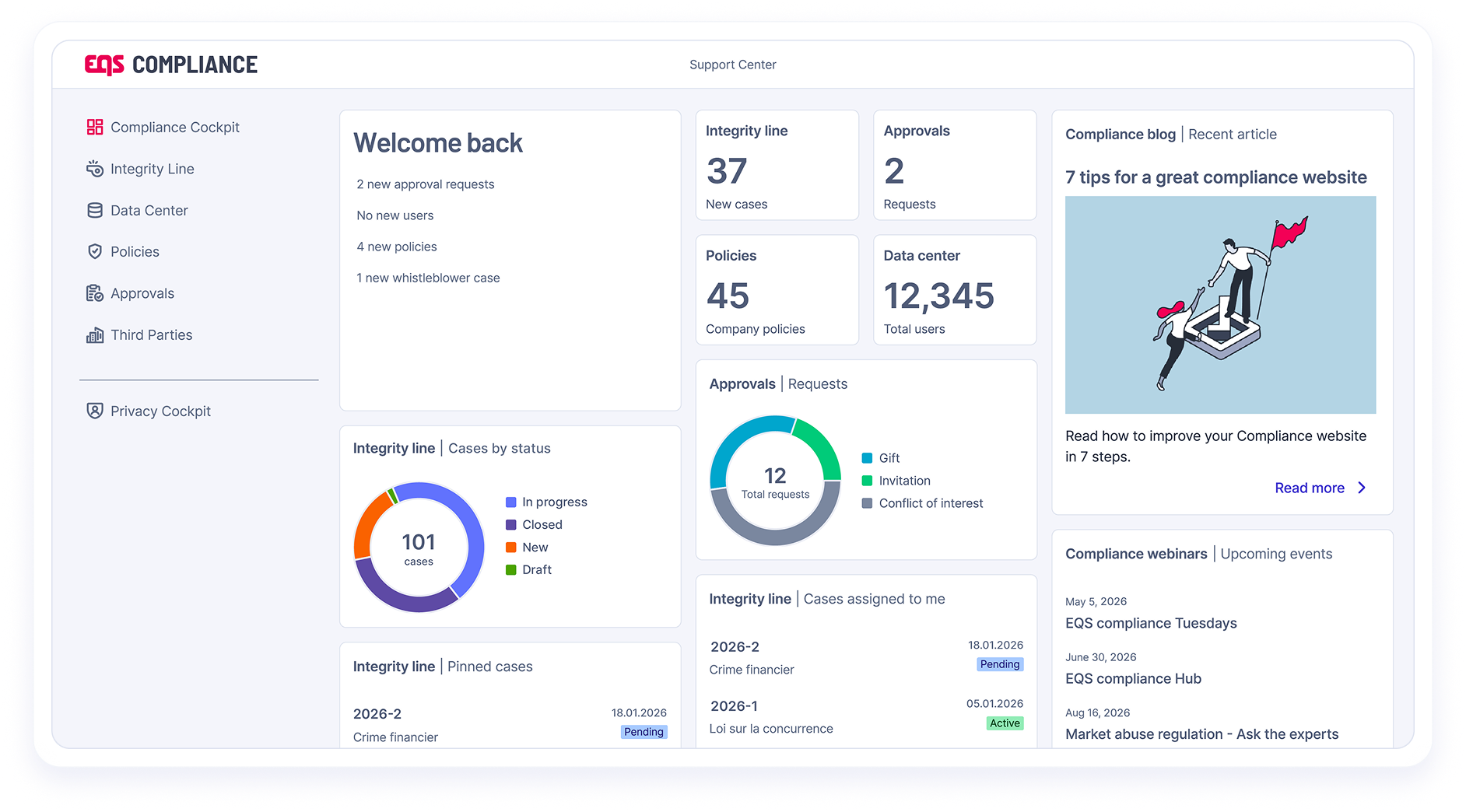
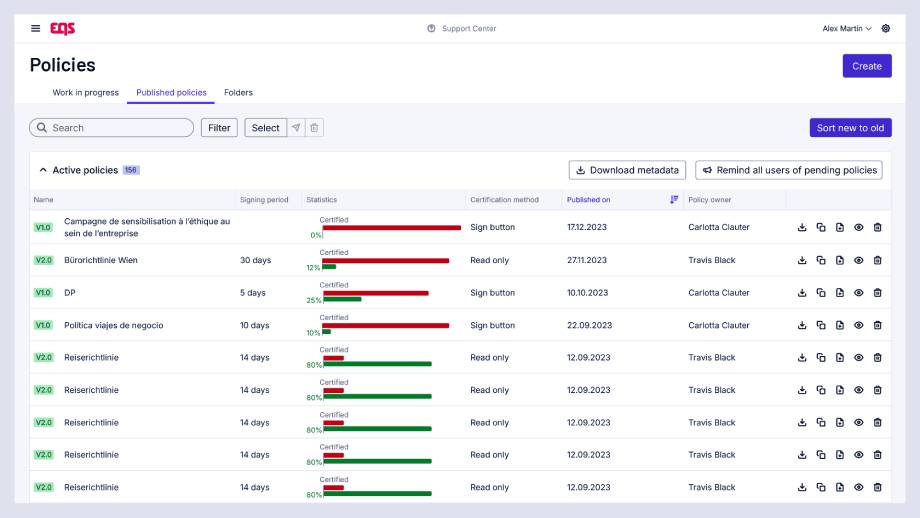
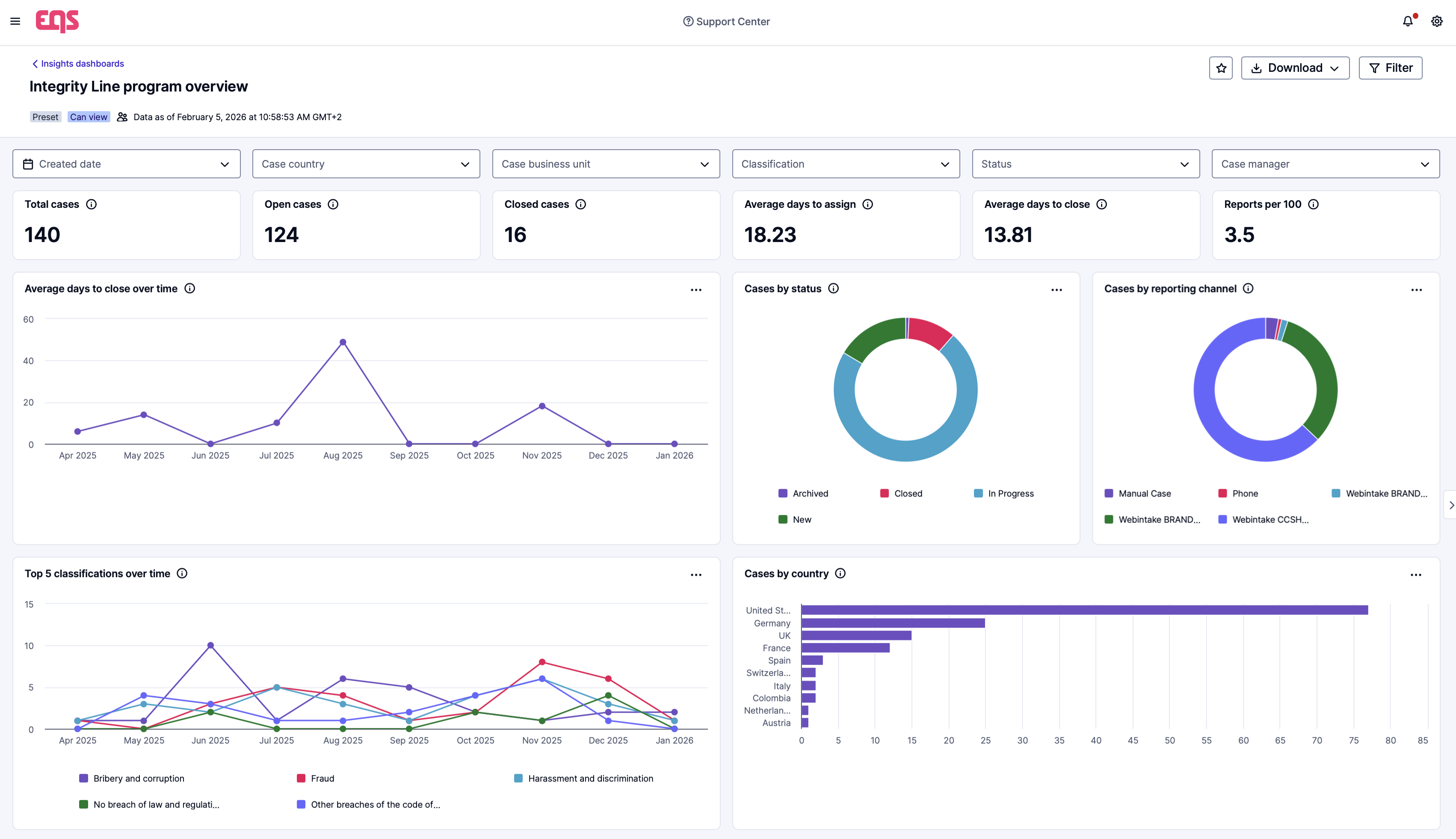
Point solutions manage one compliance function: a speak‑up channel, a policy library, a due diligence questionnaire. EQS Compliance Cockpit connects Integrity Line, Approvals, Third Parties, Policies, and Insights within a single platform and a single audit trail.
When a regulator or auditor asks for evidence, the answer comes from one place, not several exports manually stitched together.
What is Q by EQS?
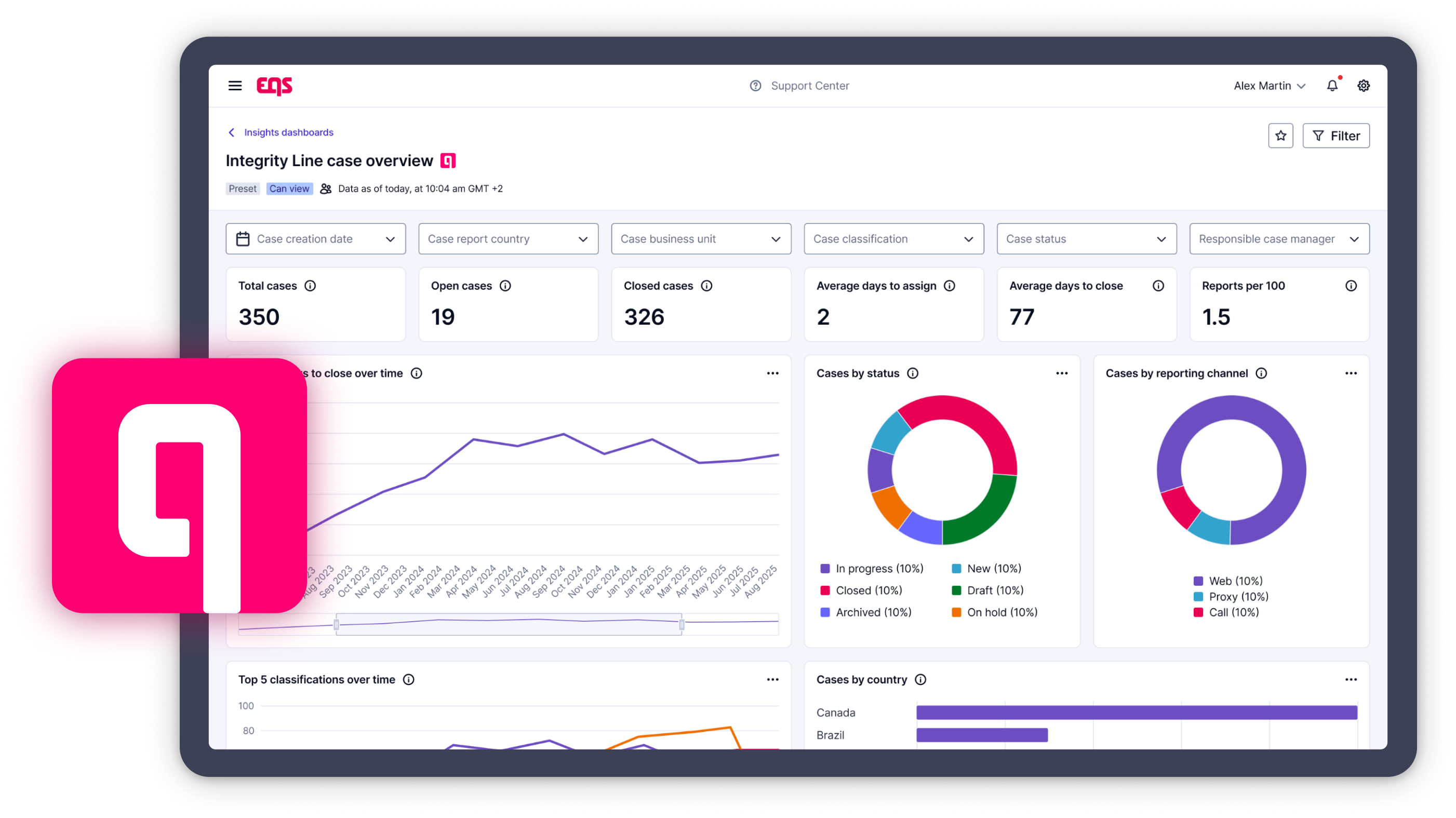
Q is the AI layer that runs directly inside EQS Compliance Cockpit. It handles the time‑consuming parts of compliance work: assessing the severity of incoming cases, reviewing third‑party questionnaires, summarizing investigation files, and helping teams move from information to a decision with the full audit trail built as they go.
Every action Q takes is logged, every recommendation is explainable, and the compliance officer always has the final say. Q is compliance‑ready AI: built by compliance practitioners, governed by default, and designed to meet the standard that regulated work demands.
Which regulations does EQS Compliance Cockpit cover?
EQS Compliance Cockpit supports compliance obligations under the EU Whistleblowing Directive, GDPR, FCPA, UK Bribery Act, Sapin II, CSRD supply chain requirements, and NIS2. The platform was designed inside European regulatory logic and is updated in line with directive changes.
How does AI work in EQS Compliance Cockpit?
AI features in EQS Compliance Cockpit handle classification, pattern recognition, and document summarization, reducing the time investigators and compliance managers spend on first‑pass analysis.
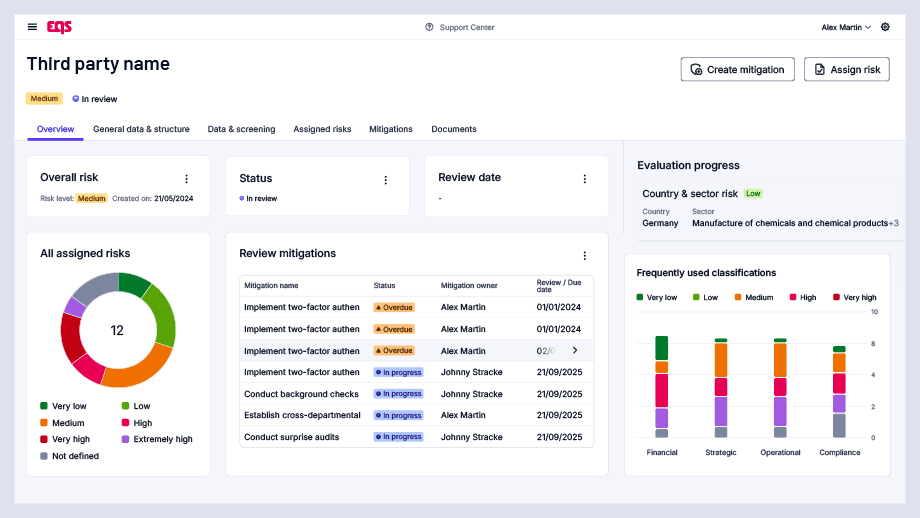
AI Severity Assignment auto‑rates incoming reports against your defined criteria. Network Mapping surfaces ownership and affiliate connections between third parties using open‑source intelligence analysis. AI File Summaries generate structured metadata for uploaded evidence.
All AI outputs are visible to the compliance officer, who can accept, edit, or override the suggestion, and every decision is logged.
Is my data processed in Europe?
EQS offers GDPR‑sovereign hosting with data residency options in Germany and other European locations. Whistleblower messaging is maintained on dedicated EQS infrastructure and is never routed through general delivery channels.
Can EQS Compliance Cockpit integrate with our existing HR and ERP systems?
EQS supports data integration via SCIM, Inbound JSON API, SFTP, and a dedicated Third Party API. HR data drives dynamic HRBP routing in the Approvals module. Case data can be pushed to external systems. Custom user attribute support ensures HR system changes propagate across the platform without manual batch uploads.
How long does implementation take?
Integrity Line can be live in days. Full multi‑module implementations for large enterprises typically run 8–16 weeks. Implementation is led by compliance specialists.
What happens when a regulator asks for evidence of our compliance program?
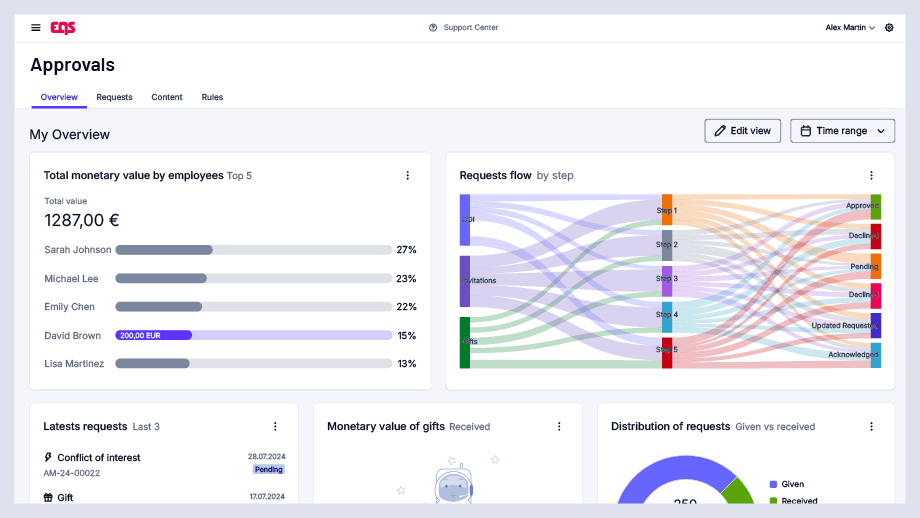
Every action in EQS Compliance Cockpit writes a timestamped entry to a centralized audit log. Case investigators can export complete investigation records. Policy compliance teams can produce signed attestation records. Approval managers can generate decision trails including the reasoning and approver identity for each outcome.
The platform was designed to answer a regulator’s evidence request, not to produce a summary of what happened.





 Powered by
Q
Powered by
Q